
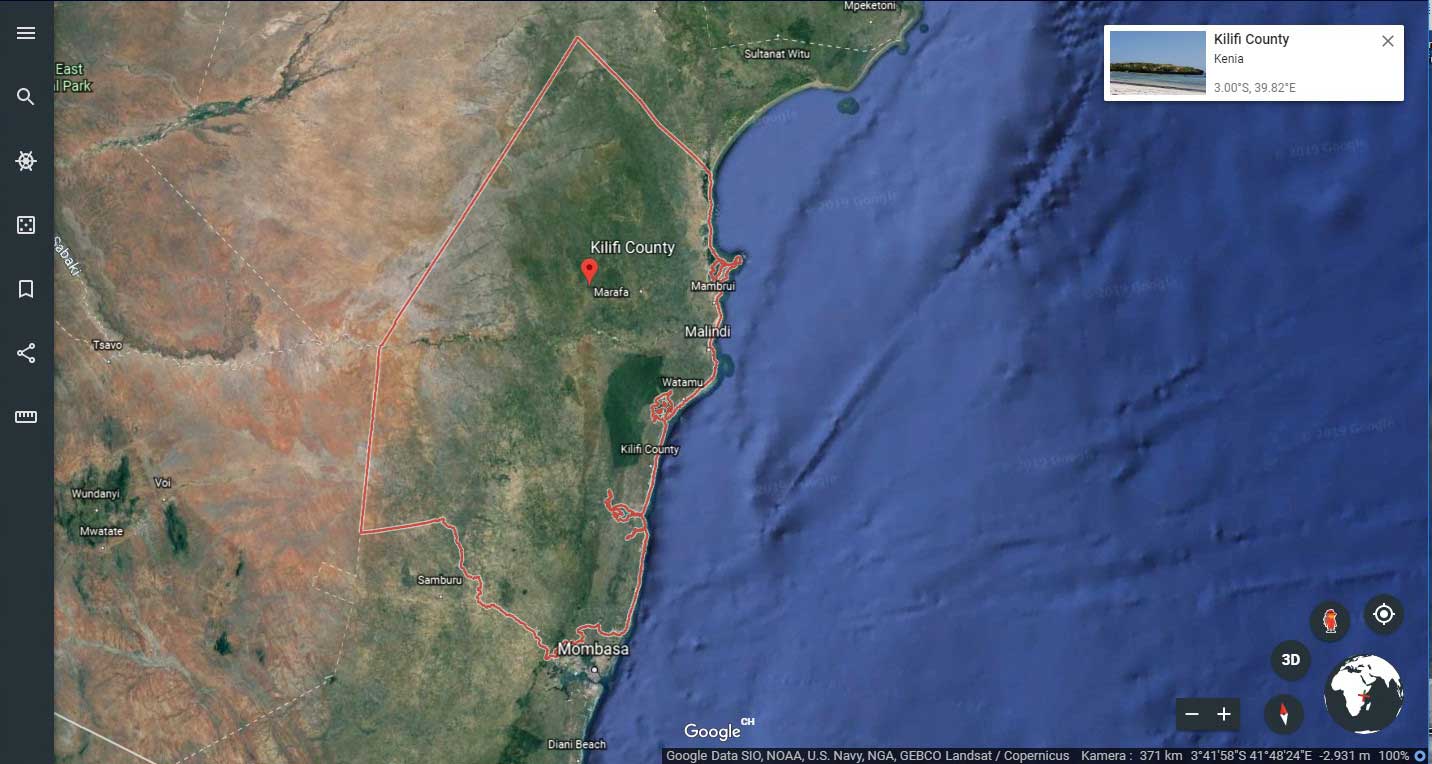
The people of Kilifi District still don't understand how important education is. Education is the issue of the 21st century. We know, more than ever, that those without education today will be jobless tomorrow. Society must not be divided into the educated and the uneducated, into the integrated and the excluded. Therefore, the education debate is no longer just about individual weaknesses or repair measures in an education system whose essential structures have proven themselves for decades.
What matters now is a forward-looking orientation of the system itself. Without fundamental reforms, it can no longer meet future demands. Instead, it must be much more future-oriented. We should consider where and how the education system needs to be fundamentally reformed so that it can meet its responsibilities in the future. Current education policy does not offer a convincing answer to the question of what the school of the future should look like. It lacks the vision that would point the way for fundamental and consistent education reform. This is all the more detrimental because changes or reforms in the education sector only have an impact over long periods of time. Education policy pays off in generations.
The "Kinder in Kenia" association wants children to grow up and live in a better future. For Kilifi County in Kenya, and more generally, educational policy should address this not tomorrow, but today. The greatest challenge facing the education system is the design and implementation of a comprehensive system that enables long-term learning. Implementing these tasks requires a fundamental shift in educational policy. We must abandon the theoretical and practical notions that schools are the places where children, adolescents, and young adults acquire the specific knowledge necessary for a professional life. Worldwide knowledge doubles every 5 to 7 years.
The innovation cycles of products and services are becoming ever shorter. The periods in which acquired knowledge remains relevant are becoming ever shorter. These insights should also increasingly be incorporated into reform concepts for schools and universities. Without adaptation to today's realities, the current educational policy repair measures will remain merely piecemeal. The principle of reform must be: every gifted person should be allowed to learn what they want to learn, and no one should be forced to learn anything! This includes putting an end to the unfair reduction of the concept of giftedness to theoretical aptitude. Because practice is more important. The educational expansion that began in the 1960s must continue—but with a new quality.
In Kilifi County, Kenya, we need a new quality of educational expansion: The new educational policy of the knowledge society must be the policy of a comprehensive system "for lifelong learning." Reductions in school hours in response to rising student numbers, as well as the hiring of staff who often lack sufficient subject-specific and methodological training, are the wrong measures. Ever-larger class sizes and a permanent teacher shortage are poor conditions for preparing students for what they will need in this "knowledge society." Concern about the deficiencies and bottlenecks in schools must trigger an educational debate.
The quality of school instruction is crucial to success or failure in our knowledge-based society. The association "Kinder in Kenia" strives to prepare children as best as possible for the professional challenges of the future. If educational opportunities remain at their current level, an educational crisis is to be feared. The freedom to choose teaching materials has been exhausted. Parents have to cover a large portion of the costs for books themselves. The association "Kinder in Kenia" is looking for people in Europe who will use their donations to help socially disadvantaged families with their children's education.
Few families have a computer at home, and not all schools are adequately equipped. Education is threatening to become a question of money again. Therefore, the "Kinder in Kenia" association is trying to provide financial support to poor families so their children can attend school.
The term "International Happy Life for Children and Vocational Training in Kilifi District, Kenya" is both a commitment and a challenge. There, we care for the well-being of children and young people from the poorest backgrounds. Through direct and targeted assistance, such as prevention and training programs, we are committed to improving their living conditions. Through comprehensive, individualized support, we promote the best possible development of their abilities so that they can find a more dignified life for themselves, their families, and the community in which they live.
The "Kinder in Kenia" association, in close cooperation with local institutions, manages and supports the following programs: promoting self-determination and promoting social harmony within the community. Humans are repeatedly referred to as "the most violent animals in the world." Drug wars and other tactics that have contributed to this dubious reputation are still waged mercilessly. Bombs explode in the middle of public events or during rush hour in subways and trains. This results in the deaths of countless innocent civilians. As if this situation weren't dramatic enough, other factors exacerbate the situation: the unexplained, abject poverty that has persisted for many years. Education is a good solution; without education, countless people lose their lives every day, entire villages are wiped out, power plants, roads, and bridges are destroyed. Terror and fear paralyze the population.
Civil wars are driving large segments of the rural population from their villages into the slums of the big cities. The urban infrastructure cannot cope with this onslaught, making it increasingly difficult to meet the population's basic needs. The justified fear of kidnapping is driving many people in the Kilifi District and the entire Coast Provence abroad. Foreign investors are also withdrawing or not settling in Kilifi at all, fearing for the safety of their employees. This is leading to massive job losses. Young academics and managers no longer see any professional prospects. They are turning their backs on their country and emigrating to Switzerland, Germany, England, or the United States. Those left behind are the few who have no other options and people who, despite terror and violence, believe in a better world. With the support of the international community, they are trying to show children and young people alternatives to war, drug trafficking, and crime, and to open up a better life for them.
Verein «Kinder in Kenia»
Grene Schait-Malenko
Bleichestrasse 7
CH - 4058 Basel
Tel +41 (0) 61 556 44 33
Mobile +41 (0) 77 99 70 307
E-Mail: info@kinderinkenia.org
URL kinderinkenia.org
Verein «Kinder in Kenia»
Credit Suisse, 4002 Basel
IBAN: CH6104835255139401000
BIC: CRESCHZZ80A